Final Bug Test Top Heading
UHSFH
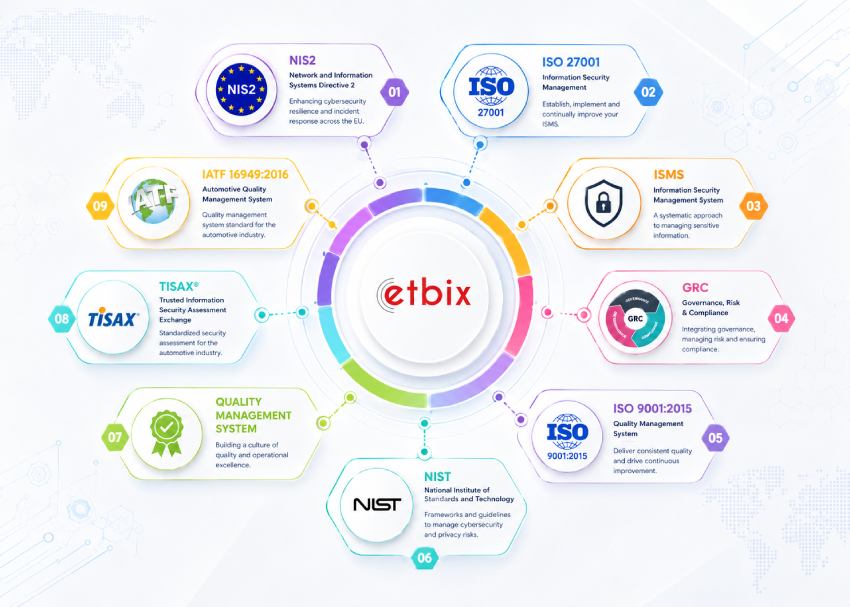
Cetbix supports multi-framework compliance and provides end-to-end traceability across assets, risks, controls, and audit evidence, making it particularly suitable for organizations implementing structured management systems.
Final bug test Section 3 Heading
Final bug test Section 1 Sub Heading
Dummy text is placeholder or filler copy used by designers, web developers, and typesetters to occupy space in a layout before the final content is ready. It helps teams evaluate formatting, choose fonts, and visualize design structure without being distracted by readable language
.png)
Final bug test Section 2 Heading
Seamlessly manage your compliance and information security across multiple cloud environments.
Gap Closure Roadmaps
Identify gaps in your security posture and receive actionable roadmaps to address these deficiencies efficiently.
Final bug test Section 2 Paragraph Heading
The Qodex URL Address Generator helps you create fake but valid-looking website URLs for testing, mock data generation, and user interface validations. Whether you’re testing contact forms, simulating referral sources, or building placeholder data in bulk, this tool makes it seamless. Combine with the Domain Name Generator, IPv4 Generator, or Token Generator to create full fake web sessions and test scenarios.
Final bug test Section 2 Block Heading
What is a URL?
A URL (Uniform Resource Locator) is the address of a resource on the web. It typically includes a domain, path, and protocol, such as: https://example.com/dashboard
In software development, especially in UI testing, API mocking, or QA automation, fake URLs are often used to simulate user interactions or external references. That’s where the Qodex URL Generator becomes handy.
- Lorem Ipsum: The standard scrambled Latin text sourced from Cicero's 45 BC ethical treatise, De Finibus Bonorum et Malorum.
- Pangrams: Sentences containing every letter of the alphabet (e.g., "The quick brown fox jumps over the lazy dog"), often used for typeface testing.
- Blind Text: Nonsenical strings or alternative language fragments used to preview specific text distributions.

Final bug test Section 3 Paragraph Heading
What Is the Qodex URL Address Generator?
The URL Generator by Qodex is a fast, browser-based tool that lets you generate fake web addresses that mimic real URL structures. These generated addresses follow common domain and path conventions (like /contact, /login, /dashboard) and are ideal for testing applications without exposing real URLs or domains.
Whether you’re a frontend developer populating test UIs or a backend engineer simulating endpoint logs, this tool provides reliable, dummy URLs at scale, without rate limits or signup.
Final bug test Section 3 Block Heading
How to Use the URL Address Generator
Getting started is a breeze, even if you’re running on two cups of coffee and five hours of sleep. Here’s how to whip up your own batch of realistic dummy URLs:
-
Type in a domain: Want your fake links to look like they’re from “alphabetaquest.org”? Go ahead and enter a custom domain. Or just let it ride with the trusty “example.com”, either works.
-
Pick how many URLs you need: Feeling ambitious? Select from presets like 10, 50, 100, 500, or go big with 1,000. (Nobody’s judging.)
-
Customize the path: Decide how detailed you want your fake links. Choose between 1 to 5 random words in each path to resemble everything from simple homepages to deep-cut resource URLs.
-
Generate with a click: Tap the “Generate URLs” button, sit back, and watch your test URLs appear like magic.
-
Download for later: Happy with your list? Grab a CSV export and import the data straight into your test environment or share it with your QA team.
With these steps, you’ll quickly populate your mock data sets and get right back to doing what matters most, building, breaking, and perfecting your app.
Final bug test Section 4 Heading
Final bug test Section 4 Paragraph Heading
Core Features and Benefits:
-
Realistic Format: All URLs follow standard structures including subdomains and path routes.
-
Fast Generation: Get 5 fresh URLs with one click.
-
No Login Needed: Use instantly, no registration or API keys required.
-
Safe & Dummy: URLs do not lead to real sites, making them perfect for offline or test scenarios.
-
Interoperable: Use with Email Generator, IPv6 Generator, or Username Generator for full user simulations.
Final bug test Section 4 Block Heading
Example of URL:
Example of URL: www.example.com
The addresses generated are syntactically valid but are not linked to real websites.
Final bug test Section 5 BlockArea Heading
Final bug test Section 5 BlockArea Heading
Final bug test Section 4 Link Text
Final bug test Section 5 Heading
Final bug test Section 5 Paragraph Heading
Ideal Use Cases:
-
Populating test databases
-
Generating fake referral or source URLs
-
Building demo dashboards and mock UI elements
-
API documentation or link simulations, for automated validation of your actual API endpoints, try Qodex automated API testing platform
-
QA workflows that need repeatable, dummy data
Final bug test Section 5 Block Heading
Recommended Tools to Pair
.png)
Final bug test Section 6 Heading
Final bug test Section 6 Paragraph Heading
Learn More
-
What Is an API Endpoint?, understand how URLs map to API resources and endpoints
-
API Documentation Best Practices, learn how to document URLs, routes, and endpoints effectively
-
What Is API Automation Testing?, automate your URL and endpoint validation workflows
Final bug test Section 6 Block Heading
Frequently Asked Questions
Are these URLs active or live websites?
Can I use these URLs in form field validation tests?
Do these include HTTPS or custom ports?
Can I create URLs with dynamic parameters?
Are these safe to use in public test demos or documentation?
Final bug test Section 7 Tab1 Heading
Final bug test Section 7 Tab1 Content
Final bug test Section 7 Tab2 Heading
Final bug test Section 7 Tab2 Content
Final bug test Section 7 Tab2 Heading
Final bug test Section 7 Tab3 Content